




Asha Bhosle: The Rebel, The Woman, The Survivor
This is not merely the story of a singer. It is the story of a rebel - quiet at times, fierce when required—and above all, deeply human.
Salar News

-
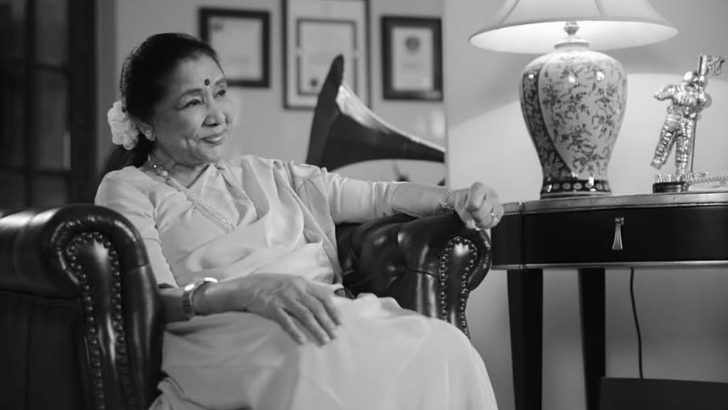
Long before she became a celebrated name, Asha’s life was shaped by loss and necessity (ANI)
By Balaji Ramachandran & Shankar Iyer
In the flood of tributes that inevitably follow a towering artist’s life, the narrative often settles into familiar patterns—milestones, collaborations, numbers, and accolades. But to view Asha Bhosle only through those lenses is to miss the far more compelling story: that of a woman who lived on her own terms, often against the grain, and carved her identity not just through music, but through resilience, defiance, and an unyielding sense of self.
This is not merely the story of a singer. It is the story of a rebel - quiet at times, fierce when required—and above all, deeply human.
Adversity as the First Teacher
Long before she became a celebrated name, Asha’s life was shaped by loss and necessity. The early demise of her father, Deenanath Mangeshkar, forced the family into a reality where survival took precedence over choice. Along with her elder sister Lata Mangeshkar, she stepped into the working world at the tender age of 10, when most children are still discovering themselves.
This was not a romanticised beginning. It was harsh,
demanding, and unforgiving.
In those formative years, Asha did not have the luxury
of artistic selectivity. Every song she sang was not just an assignment—it was
sustenance. Each recording meant that the household could function a little
longer, that responsibilities could be met, that dignity could be preserved. If
that meant singing songs that others might have refused, so be it. There was a
quiet courage in that acceptance—a willingness to do what was necessary, not
what was ideal. From that spirit comes her legacy of over 8,000 Hindi film songs
spread over eight decades (Overall, an estimate of close to 12,000 songs across
languages, film and non-film).
It is perhaps here that we first encounter the rebel
in her—not in loud defiance, but in an inner resolve to endure and move
forward.
A Life Decision and Its Aftermath
One of the most defining and delicate chapters of her life was her early marriage. At just sixteen, she made the impulsive decision to elope and marry. It was a choice made in youth, perhaps in search of autonomy, perhaps in defiance of circumstance. The years that followed, however, were far from easy.
Without dwelling on details that risk reducing a
deeply personal experience to mere narrative, it is important to acknowledge
that this phase of her life brought significant emotional strain. What stands
out, however, is not the adversity itself, but her response to it. She chose to
walk away—while raising two children and expecting a third.
That decision, in its context, required immense
courage. To step out of a difficult marriage, return to an uncertain
professional space, and rebuild one’s life is never easy, more so in a time
when societal expectations were far less forgiving.
And yet, she did.
Her journey as a mother too was marked by profound
sorrow. To outlive two of one’s children is a grief that defies articulation.
That she carried this pain with grace, continuing to create, to perform, and to
engage with life, speaks to a depth of strength that often goes unacknowledged.
The Name She Chose to Keep
Names carry identity, memory, and sometimes,
contradiction.
After her first marriage, she became “Asha Bhosle.”
What is intriguing is that she retained this surname throughout her life—even
after the marriage ended, and even after she later married R. D. Burman.
She could have, at multiple points, chosen
differently. She could have returned to the Mangeshkar name, which by then had
become synonymous with excellence. She could have adopted a new identity after
her second marriage. But she did neither.
What does this choice signify?
Perhaps it reflected a fierce sense of ownership - of her life, her decisions, and even her follies. Perhaps it was a way of saying that one’s past, however complex, need not be erased to move forward. Or perhaps, it was simply an assertion of individuality in a world eager to define her through associations.
Finding a Voice: The Early Struggles
In her early years as a playback singer, Asha was still searching for recognition, for stability, and perhaps most importantly, for her own voice.
Two songs, at the least, in her initial career, bear
traces of influence of Geeta Dutt, who was more established at the time. This
was not imitation as much as it was adaptation—a young artist navigating an
industry with established benchmarks, trying to find a foothold. Songs like Man more gaa jhoomke, Dol mere man pyar se, Shokh shokh aankhein
are cases in point.
The turning point came with her association with O. P.
Nayyar.
The Nayyar Chapter: Art, Support and Silence
The professional collaboration between Asha Bhosle and
O. P. Nayyar transformed both their careers. Nayyar, known for his distinctive
musical sensibilities, saw in her a potential that others had perhaps not
observed. More importantly, he shaped her voice — encouraging a style that was
playful, sensuous, and rhythmically vibrant, setting her apart from her
contemporaries.
Throughout the 1960s, it is remarkable that nearlyevery Nayyar composition featuring a female voice was sung by her. This was not
merely a professional preference; it was a creative partnership of rare
intensity.
And then, as abruptly as it flourished, the
association ended.
Asha chose not to speak publicly about this phase
after their separation — a silence that commands respect. It suggests a
deliberate decision to preserve certain experiences as private, resisting the
temptation to turn them into public narrative.
Yet, their music remains—a testament to a period when
personal and professional currents seemed to converge in powerful ways. How can
one remain unaffected by the timeless gems when the two came together - Poocho Na Hamein Hum Unke Liye, Ye Sama Phir
Kahaan, Koi Kehde Kehde Zamane Se Jaake, Ek Tu Hai Piya Jispe Dil Aa Gaya
and many others…
Transitions and Choices: The Burman Era
If the Nayyar years represented discovery, her association with R. D. Burman marked reinvention. Their eventual marriage was unconventional in many ways. He was younger to her by six years, and the relationship faced resistance from different quarters. Yet, it was also a meeting of artistic minds—one that produced some of the most memorable musical expressions of its time.
An interesting, albeit sensitive, observation often
arises in discussions of this period: the apparent overlap between the decline
of Nayyar’s prominence and the rise of Burman’s. Did Asha, consciously or
otherwise, align herself with emerging currents in the industry?
Framed crudely, such a question risks sounding
opportunistic. But viewed through a more nuanced lens, it reflects something
else entirely... professional foresight. In a field as unpredictable as cinema,
the ability to adapt, to recognise changing trends, and to position oneself
accordingly is not merely advantageous; it is essential.
If Asha did make such choices, they can perhaps be seen not as acts of abandonment, but as decisions rooted in survival, growth, and continuity. After all, her journey had always been about making the most of the opportunities available—and sometimes, about creating those opportunities herself. Mixed gems of the Asha – RDB collaboration like Daiyya Yeh Main kahaan Phansi, Phirse Aaiyo Badra Bidesi, Maar Daalega Dard-E-Jigar, Meri Nazar Hai Tujhpe and Chhoti Si Kahani Se continue to wow music lovers eternally.
Making Opportunity Count
This ability to seize the moment is evident in several
phases of her career.
When S. D. Burman and Lata Mangeshkar had a
professional disagreement, Asha stepped in to fill the void. It was a
significant opportunity, and she embraced it fully — delivering performances
that not only met expectations but expanded her own artistic range.
Similarly, her association with composer Ravi. Filmmaker
B R Chopra who showed his faith in Ravi, is also believed to have strongly
supported Asha Bhosle as the female singing voice in his films. Ravi, in turn,
gave her compositions that allowed her to explore emotional depth and nuance in
new ways.
In each of these instances, the pattern is clear: opportunity may have knocked, but it was her readiness—and her willingness to step beyond comfort—that allowed her to make it count. Just sample these melodies of Asha for S.D.Burman and Ravi – Jeene Do Aur Jiyo, Tujhe Mili Roshni Mujhko Andhera, Dil Ki Manzil Kuch Aisi Hai Manzil, Ta Thai Tak Thai, Raat Chup Hai Chandni Madhosh Hai, Dil Ki Kahani Rang Laayi Hai, Aaj Ye Meri Zindagi, Uljhan Suljhe Na – to know how the impactful partnerships blossomed with progressing time.
The Rebel with a Cause
To describe Asha Bhosle as a “rebel” is not to suggest
rebellion for its own sake. Hers was not a defiance born of impulse, but one
shaped by circumstance, conviction, and an instinct for self-preservation.
She challenged norms - by fighting it out and
remaining career focused, during her tough marriage years, choosing her own
path in relationships and navigating professional transitions on her terms. She
endured losses, both personal and emotional, without allowing it to define her
entirely. She made choices that were not always conventional but were
undeniably her own.
And perhaps most importantly, she transformed these
experiences into art.
Asha Bhosle’s
singing shows a certain emotional texture —a lived quality—that cannot be
taught or replicated. It comes from having seen life in its many shades, from
having felt deeply, and from having emerged, time and again, with a renewed
sense of purpose.
Beyond the Familiar Narrative
In the end, to remember Asha Bhosle only through
statistics or even through her most celebrated works is to see only part of the
picture.
The fuller portrait is that of a woman who navigated complexity with courage, who embraced her imperfections, and who refused to be confined by expectations —whether societal, professional, or personal.
Her life reminds us that greatness is not always about perfection. Sometimes, it is about persistence. About the ability to keep moving, to keep creating, and to keep believing in one’s own voice—even when the world is uncertain.
In that sense, Asha Bhosle was not just an artist of
extraordinary ability. She was, in the truest sense, a rebel with a cause.
And perhaps the most fitting way to understand her journey is through the philosophy captured from her song in “Waqt” - aagey bhi jaane na tu, peechhe bhi jaane na tu, jo bhi hai, bas yahi ek pal hai (You know not the future, You know not the past, That which exists, exists in the moment).
A song that gently reminds us of life’s fleeting,
unknowable nature. The future remains uncertain, the past often beyond full
comprehension, and what truly belongs to us is only the present moment. In many
ways, this idea mirrors Asha Bhosle’s life. She did not remain imprisoned by
what had gone before, nor did she wait for guarantees of what lay ahead.
Instead, she lived—and sang—fully in the moment that was hers. Each decision,
each risk, each reinvention seemed rooted in this instinctive embrace of the
“now.” And perhaps that is the quiet lesson she leaves behind: that life, in
all its unpredictability, is best met not with hesitation, but with presence,
courage, and an unrelenting will to move forward.
Balaji Ramachandran and Shankar Iyer
head Team Nostalgiaana which has rekindled the radio nostalgia for Retro Hindi
Film Music through specially curated online shows for close to six years as
part of an endeavour to recreate the days when listening to the radio was an
intrinsic part of our lives.
The authors
can be reached on www.nostalgiaana.com
Share Now

Leave a Reply
Your email address will not be published. Required fields are marked *
Other Stories
.png)
.png)
.png)

.png)

.png)
.png)
